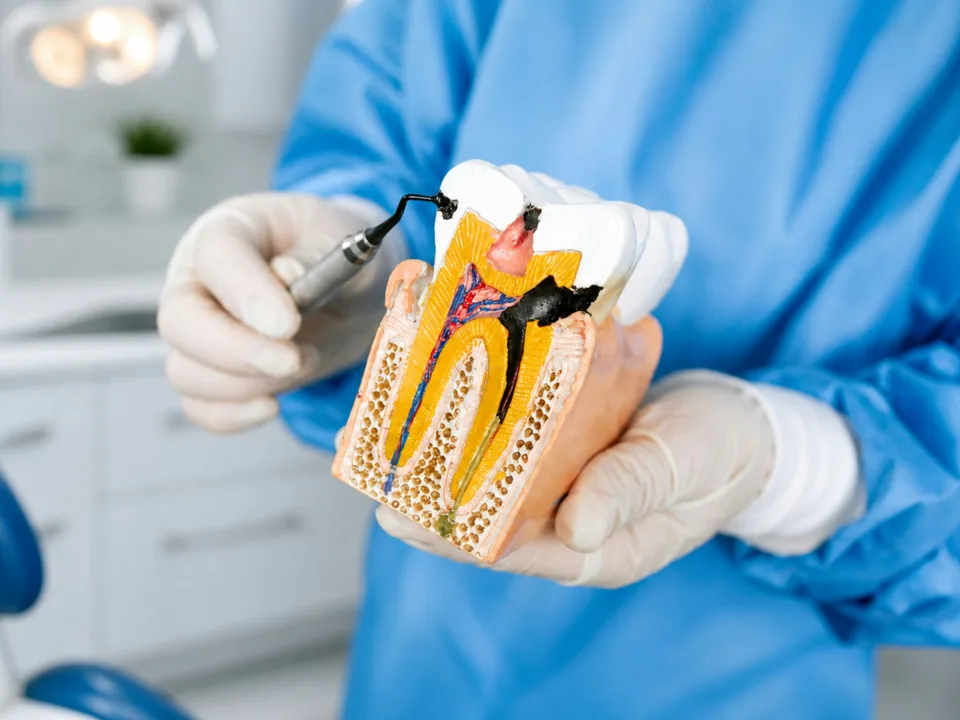
A cavity is bacterial destruction of the tooth, and it does not stop or reverse once it has broken through the enamel. It advances at its own pace towards the pulp. A filling removes the decayed tissue and seals the tooth. It is cheap, quick, and done in one appointment.
When a cavity can be treated with a filling, care is usually simpler than waiting until damage reaches the inner tooth. The dentist assesses the depth and remaining tooth structure before recommending a filling or a different treatment.
We use tooth-coloured composite, bonded to the tooth and cured with light. It is mercury-free, needs less removal of healthy tooth than amalgam did, and is shade-matched so it is invisible.
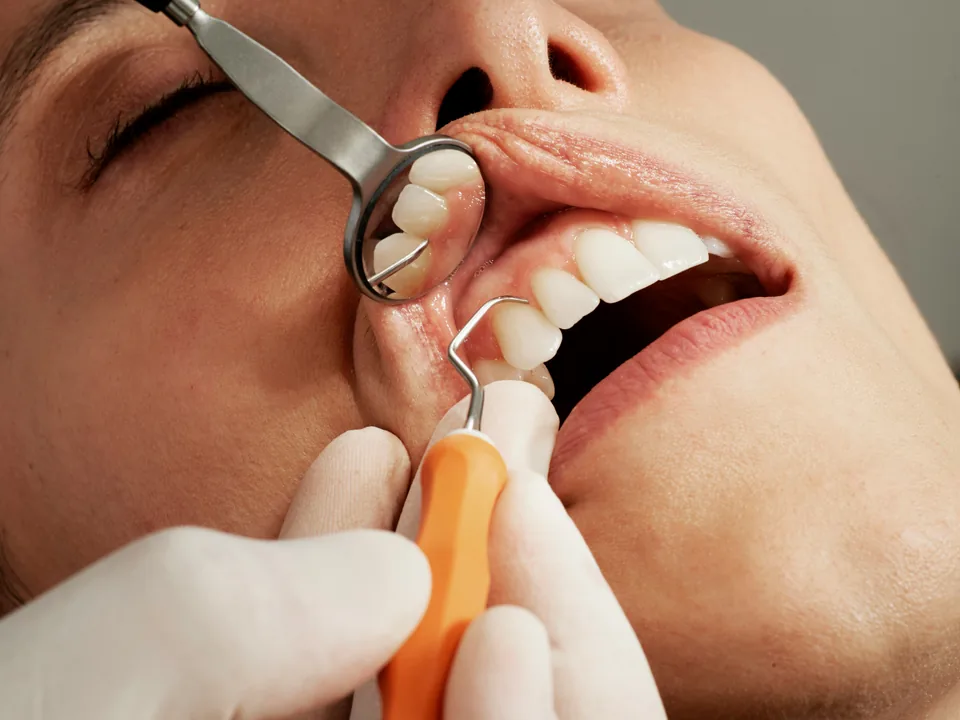
You probably need this if…
- A visible hole, pit or dark spot on a tooth
- Sensitivity to sweet, hot or cold that settles quickly
- Food consistently getting stuck in one particular spot
- A rough or sharp edge you keep catching with your tongue
- An old filling that has chipped, discoloured or fallen out
- A cavity spotted at a routine check-up with no symptoms at all
Recognising two or more of these does not confirm a diagnosis. It means an examination is worth booking before the problem gets more expensive.
How the treatment works
- 01 Diagnosis
Clinical examination plus a bitewing radiograph, since decay between the teeth is invisible to the eye until it is extensive.
- 02 Anaesthesia if needed
Shallow cavities often need none. Deeper ones are numbed.
- 03 Decay removal
Only the affected tissue is removed. Modern adhesive dentistry preserves far more healthy tooth than the older approach.
- 04 Bonding and layering
The composite is placed in layers and light-cured, each layer shade-matched to the surrounding tooth.
- 05 Finishing
The bite is checked and the filling polished, so it does not stain at the margins.
What dental fillings costs in Lucknow
Dental filling cost in Lucknow depends on the size and location of the cavity, the surfaces involved and the restoration material. An examination establishes whether a filling is suitable or whether the tooth needs a different type of treatment.
Your written estimate sets out the recommended treatment and any separate charges. The guide below explains what to check before agreeing to the plan.